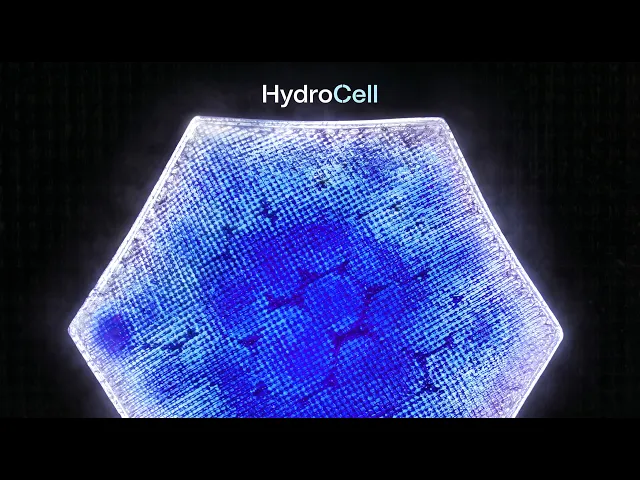
Hydrocell
Air Inflation to Environment - Responsive Materials
Tools
● Rhino3ds ● Bambu Studio ● 3d printer (X1C & A1 Mini) ● AI TOOLS ● Adobe Suite ●
Involve
Lee Kaien, Zane
Alex Ong
Info
Over 13 weeks, together with Alex, we set out with a simple goal: to explore how accessible 3D printing and material experimentation could uncover new forms of responsive design.
Beginning with the theme of inflatable systems, we challenged a basic assumption why must inflation always rely on air? This question led us to rethink inflation not as a mechanical act, but as a material-driven response to the environment. Using superabsorbent polymer (SAP), which absorbs water and expands in volume, we developed HydroCell—a climate-responsive inflatable system powered by rain, humidity, and natural moisture.
Through iterative prototyping with consumer-grade 3D printing, TPU, and SAP, we explored how simple tools and intelligent materials could produce complex responsive behaviour. Scaled into modular shading cells, HydroCell expands, stores water, diffuses light, and enables evaporative cooling.
Together this experiment create new design possibilities as we reimagining inflation not by pumping air into form, but by allowing the environment to activate it.
Rethinking Inflation
We began by questioning something we often take for granted… why must inflatable systems always rely on air, pressure, or pump? That assumption revealed a bigger opportunity to rethink what inflation could be altogether.
Designing a New Material
Our goal was to explore how accessible 3D printing and everyday materials could create a new kind of responsive system, that performs through its environment. We wanted to move beyond making objects, and instead design behaviour into material itself.

Inflated by Environment
By combining flexible TPU with superabsorbent polymer, we created HydroCell a material system that expands when exposed to water, humidity, and rain. Rather than pumping air into form, the environment becomes the force that activates it.


Process / Iteration
Through constant prototyping, material testing, and 3D print iteration, we explored how structure, wall thickness, TPU bridging, and embedded SAP could control expansion and performance. What started as a small material experiment could potentially evolve into a scalable climate-responsive system.


