Feed Ducky
An agentic autonomous character that makes decision-making
Tools
● P5.JS ● AI Tools ●
Involve
Lee Kaien, Zane
Info
I wanted to explore a different kind of interaction…one built not on instant response, but on understanding.
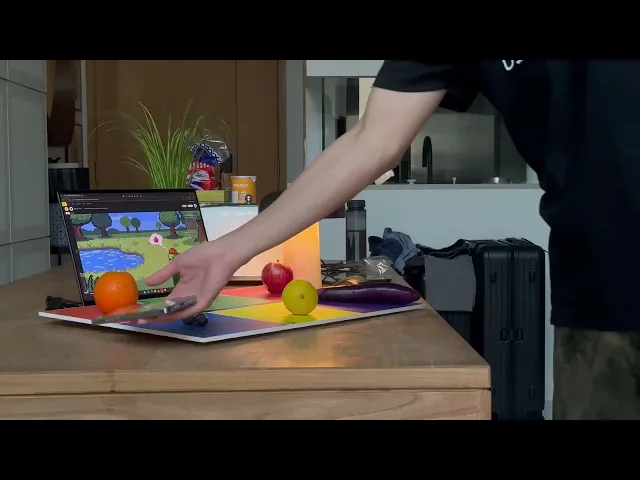
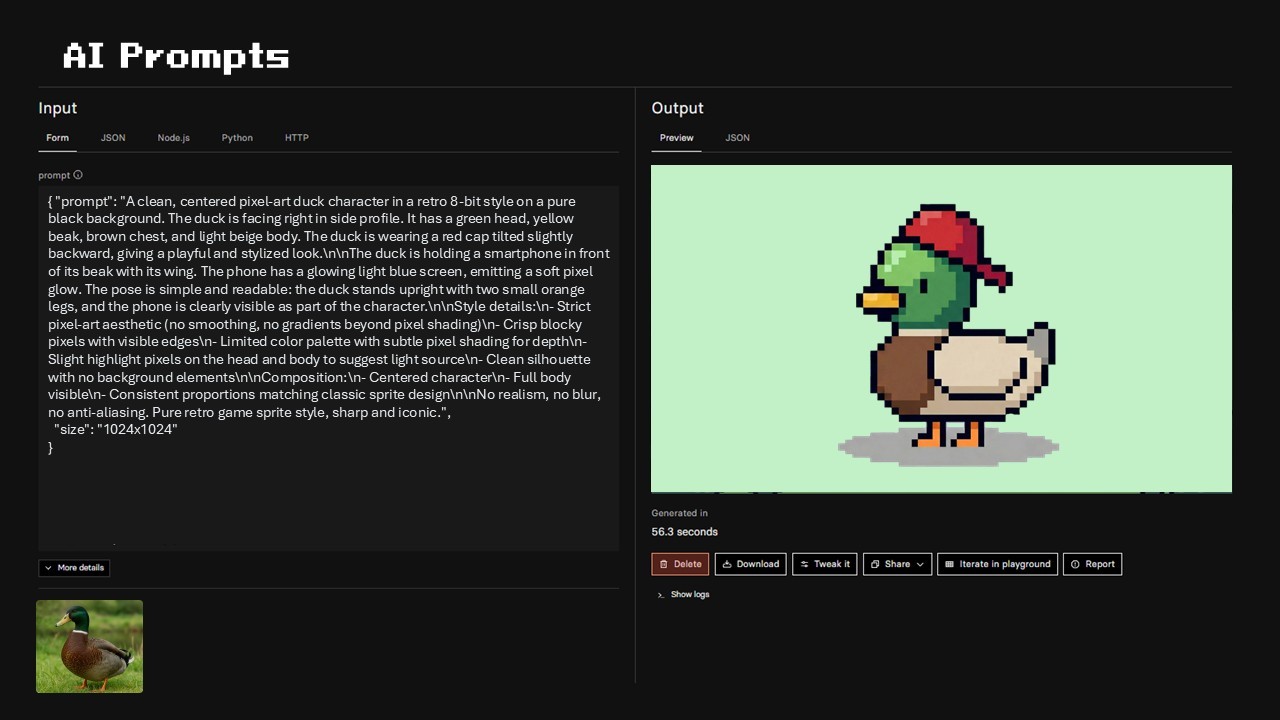
Over 8 weeks, I designed Feed DUCKY, an autonomous digital companion with memory, preferences, emotions, and a mind of its own. Rather than creating a predictable virtual pet, I explored how ambiguity, consequence, and care could make interaction feel more human where users must observe behaviour, adapt their actions, and slowly learn what DUCKY needs. Built through p5.js, phone-computer connectivity, and AI-assisted coding, the project became an experiment in designing digital companionship proving that meaningful connection can emerge when technology stops behaving like a tool, and starts feeling like something alive.
Goal & Objective
I wanted to explore what makes a digital character feel less like a programmed system and more like something with its own presence, needs, and personality. The goal was to create an agent that doesn’t simply obey input but evaluates, reacts, and behaves on its own terms.
What I Was Trying to Achieve
Rather than designing a one-way interaction where users control the outcome, I wanted to create a two-way relationship built on observation, adaptation, and care. My intention was to make engagement feel less like commanding a pet and more like understanding a living companion with moods, preferences, and boundaries.

What This Project Proves
Feed DUCKY shows that emotional attachment doesn’t come from realism it comes from behaviour that feels autonomous and unpredictable. By giving Ducky an evolving internal states the project explores how "agent" can turn simple interaction into genuine connection.




How Ducky Thinks, Feels, and Responds
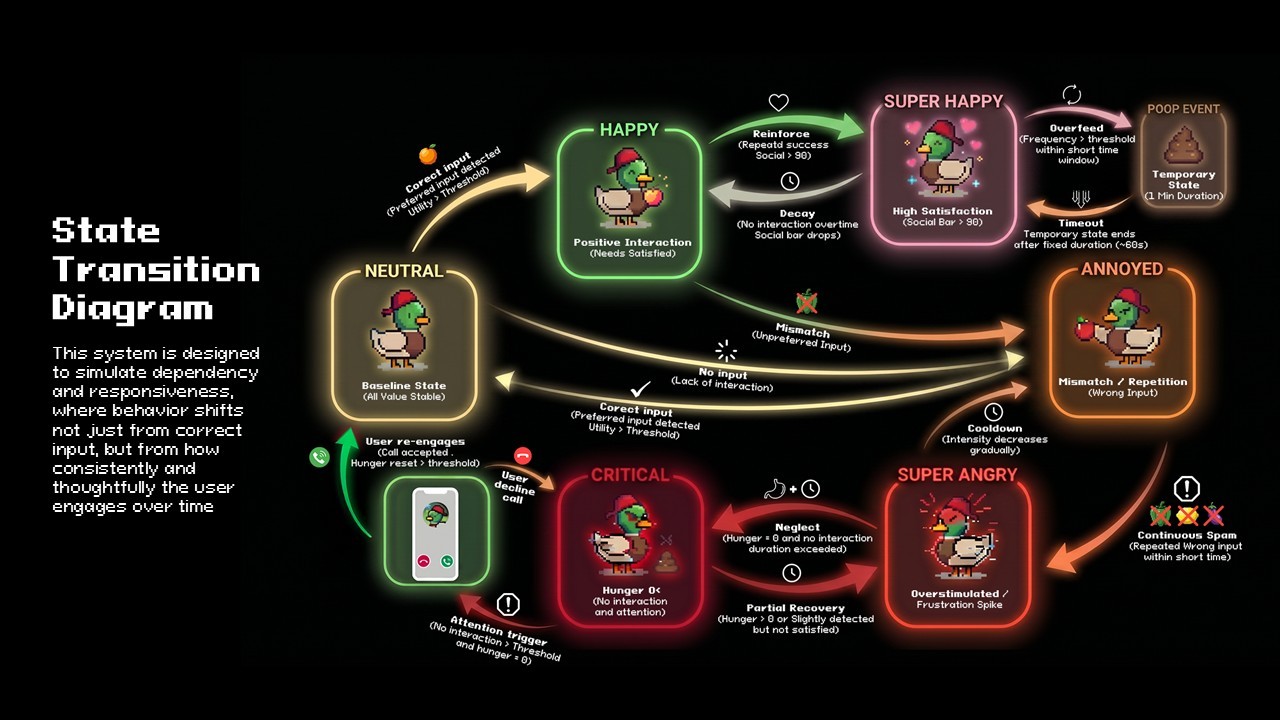
Ducky operates through an internal behavioural loop: it continuously monitors hunger, mood, social battery, and hidden cravings, then evaluates user input against its own current needs before deciding how to respond. This means the same action can lead to very different outcomes happiness, rejection, frustration, or attention-seeking making interaction feel dynamic, negotiated, and alive rather than fixed or predictable.