Kontrol
Where balance becomes control.
Tools
● P5.JS ● Processing (python) ●
Involve
Lee Kaien, Zane
Info
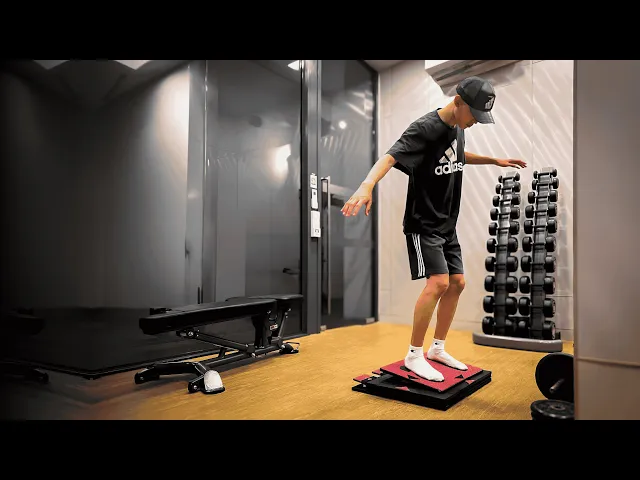
The brief was straightforward…design a controller to play Snake. But very quickly, I started asking myself: why does a controller always have to be handheld? That one thought changed everything. Instead of designing buttons for fingers, I began exploring how movement, balance, and the body itself could become the interface.
Over 8 weeks, I tested materials, built mechanisms, coded with Arduino and Processing, and pushed myself into electronics and interactive systems areas I had never fully explored before.
Breaking the Brief
When I first received the brief to design a controller for Snake, I found myself questioning the obvious—why does a controller always have to be something we hold in our hands? I became interested in how play could feel more physical, immersive, and meaningful, especially if movement itself became part of the interaction. That curiosity pushed me to break away from conventional handheld controls and design an experience where the body becomes the controller.
Opportunity
As I explored further, I realised the bigger opportunity wasn’t just in gaming…it was in movement. Many people struggle to stay active because exercise often feels repetitive, but people naturally engage longer when movement feels playful and shared. That made me wonder: what if a game controller could quietly encourage physical movement without it ever feeling like exercise?

Designing Beyond Form
This project pushed me far beyond traditional product design, forcing me to step into coding, circuitry, Arduino logic, and system building areas that were unfamiliar and challenging at first. There were many moments where things failed, sensors misread, or the interaction simply didn’t feel right, but each setback taught me how behaviour is designed just as much as form.


Iterative Prototyping
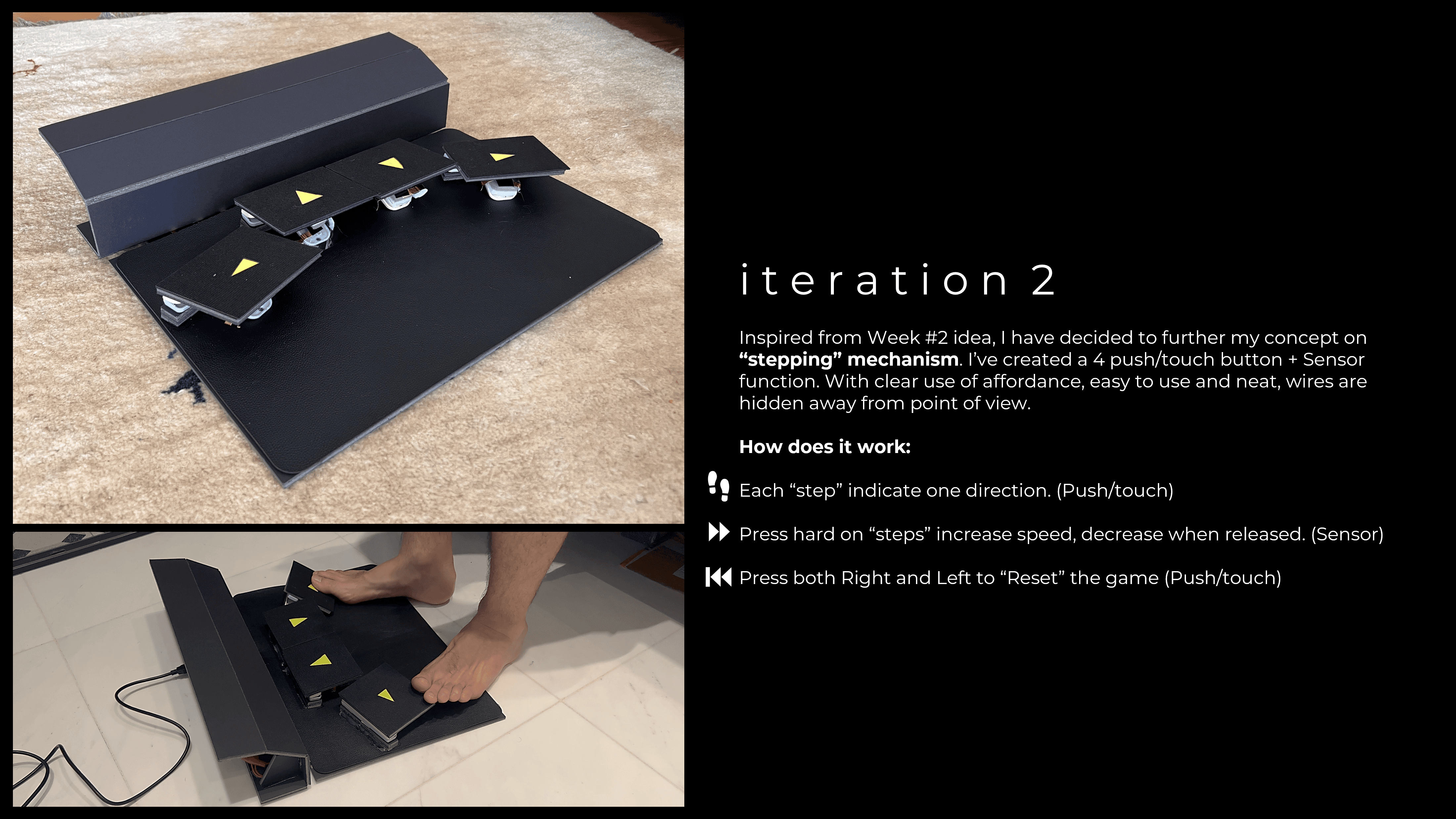
I started with a simple cardboard model to quickly test movement and core mechanics, then gradually refined the structure through stronger materials and improved form before arriving at a final wooden prototype that offered greater stability, durability, and a more polished user experience. This shift in material was essential not only to improve interaction quality, but to safely support the user’s full body weight.